Some Burgundy estates are famous for their size, others for their history. Domaine Robert Groffier is famous for a simpler reason: it owns plots in some of the most coveted climats of the Côte de Nuits.
Here is how to read this range. You can browse all the available cuvées directly.
A family estate in the Côte de Nuits
The estate has been run by the same family for several generations, with vineyards located mainly in Chambolle-Musigny and Gevrey-Chambertin.
This is a typically Burgundian setup: a modest-sized estate whose value lies not in its size but in the quality of the climats it owns. A few rows in a great climat are worth more than several hectares elsewhere.
The style
The estate's wines are renowned for their finesse and aromatic precision. Extractions are measured, the aging carefully controlled, and the goal is clearly to express the terroir rather than to showcase power.
This approach is perfectly suited to the carefully tended climats, most of which are renowned for their delicacy.
Our pick for this article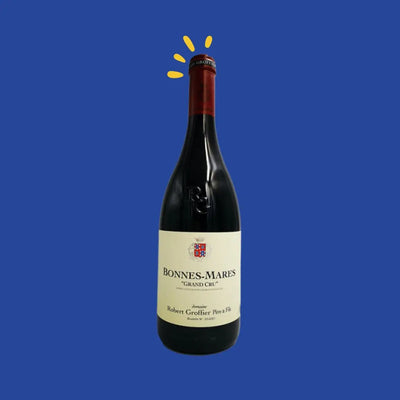
A reminder of the Burgundian hierarchy
In Burgundy, the classification is based on the plot, not the producer.
- Premier cru: the name of the village followed by the climat, such as Chambolle-Musigny Les Amoureuses.
- Grand cru: the name of the climat alone, without the village, such as Bonnes-Mares or Chambertin-Clos de Bèze.
This rule is useful: if the name of the village appears before the name of the climat, you are looking at a premier cru. If it does not, it is a grand cru.
With one important caveat: some premier crus are so renowned that they sell for more than neighboring grand crus. Les Amoureuses is the most famous example.
The available cuvées
Chambolle-Musigny 1er Cru Les Amoureuses
Burgundy's most famous premier cru, located just below the Musigny grand cru, on comparable soils.
Many believe it should have been classified as a grand cru, and its price reflects this opinion. The estate is one of its main owners.
See the Chambolle-Musigny Les Amoureuses 2018 and our article: the Les Amoureuses guide.
Bonnes-Mares Grand Cru
A grand cru straddling Chambolle-Musigny and Morey-Saint-Denis. Its profile is significantly more structured than that of the other climats in Chambolle, making it an exception in the village.
See the Bonnes-Mares Grand Cru 2018.
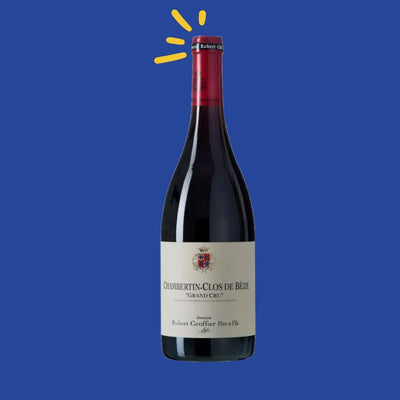
Chambertin-Clos de Bèze Grand Cru
One of Burgundy's oldest and most prestigious grand crus, in Gevrey-Chambertin, whose origins date back to a monastic foundation in the Early Middle Ages.
See the Chambertin Clos de Bèze 2018 and our article: the Bonnes-Mares and Clos de Bèze guide.
The 2018 vintage
The three cuvées come from the same vintage, making them a remarkable comparative series.
2018 was a warm and sunny year in Burgundy, with generous yields after several poor vintages. The reds are rich and ripe, with supple tannins and vibrant fruit.
It is an immediately appealing vintage, best drunk between five and fifteen years from now depending on the climats, with slightly lower acidity than average.
A tasting worth making
Three climats, one producer, one vintage. This is exactly the setup that allows you to understand what the word terroir means in Burgundy.
- Les Amoureuses: the lace and perfume of Chambolle.
- Bonnes-Mares: structure and power, in the same village.
- Clos de Bèze: the depth and architecture of Gevrey.
Served together at 15 degrees in identical glasses, they tell the story of the Côte de Nuits in three glasses.
How to serve
- Temperature: 15 to 16 degrees. Above this, the aroma of the Pinot Noir disappears.
- Decanter: one hour for Les Amoureuses, one to two hours for the grand crus. Be careful not to over-aerate a fine wine.
- Glass: large Burgundy glass, wide and balloon-shaped.
- With food: Bresse poultry, pigeon, veal, mushrooms. Clos de Bèze can stand up to a more substantial dish.
Frequently asked questions
Can a premier cru be worth as much as a grand cru?
Yes, and Les Amoureuses is proof. The classification dates back to the 20th century and has not been revised since. Some premier crus now sell for more than neighboring grand crus.
How long should these wines be kept?
Les Amoureuses: ten to twenty years. Bonnes-Mares: fifteen to twenty-five years. Clos de Bèze: fifteen to thirty years in great years.
Should you wait for a 2018?
The vintage is generous and already accessible with a good decanter. It will improve for another ten years.
Why are these wines so rare?
The plots of these climats are tiny and divided among several owners. Each estate produces only a few thousand bottles at best.
Ordering a Robert Groffier from Le Caveau des Pépites
For this type of bottle, traceability and storage conditions are essential. We work directly with the estate to guarantee the origin of every bottle. Stored in our climate-controlled, humidity-regulated warehouses in France, hand-packed and wrapped in reinforced packaging, shipped from mainland France via tracked and insured transport. Free delivery on orders over 300 euros. Customer service available seven days a week, in French and English.
To learn more: our grand crus and our Côte de Nuits wines.