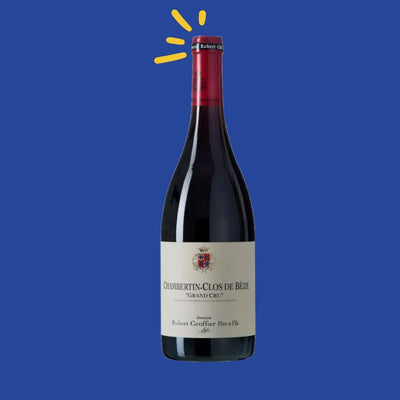
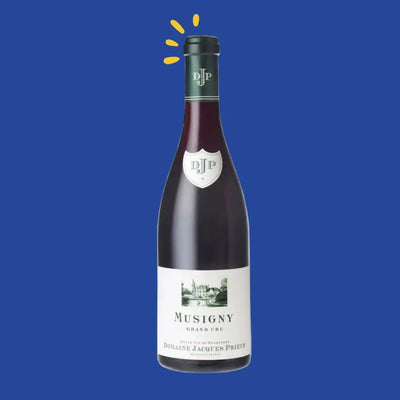
There is one estate whose name serves as the absolute benchmark in wine. When you want to say that a bottle is at the very top, you compare it to this one.
To see what is available, visit the Domaine de la Romanée-Conti collection.
An estate of Grand Crus
The estate is unique because it consists almost entirely of Grand Crus, from the finest climats on the Côte de Nuits.
The Two Monopoles
In Burgundy, a monopole is a climat owned by a single proprietor. This is rare, as the Napoleonic inheritance system has fragmented almost the entire vineyard.
- La Romanée-Conti: just over one and a half hectares, in the heart of the Vosne slope. It is the most famous climat in the world, and annual production amounts to only a few thousand bottles.
- La Tâche: about six hectares, just to the south. Larger, and for many tasters, the estate's most spectacular wine.
The Other Grand Crus
The estate also owns parcels in Richebourg, Romanée-Saint-Vivant, Grands-Échezeaux, and Échezeaux, as well as a portion of Corton and Montrachet Blanc.
See our articles on Échezeaux and Montrachet.
Our pick for this article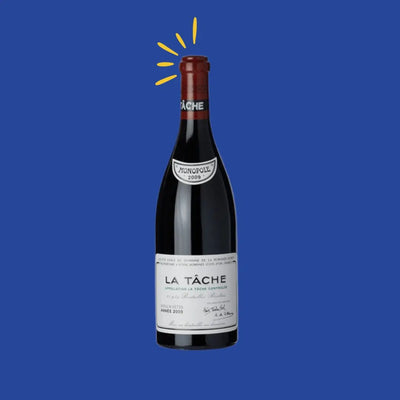
The Vosne-Romanée Slope
The Grand Crus of Vosne occupy a narrow strip halfway up the slope, between the road and the forest.
Why This Location
- Drainage: the slope drains water, but not too quickly.
- Soil Depth: enough soil to nourish the vines, enough limestone to restrain them. At the top of the slope, the soil is too thin. At the bottom, it is too rich.
- Exposure: east and southeast, catching the morning sun.
- Protection: the valley and the forest above shelter the vines from cold winds.
It is this strip, only a few dozen meters wide, that concentrates the value. A few meters higher or lower, and the classification and price change completely.
The Estate's Work
- Very Low Yields: well below the maximum permitted.
- Biodynamic Farming for decades.
- Hand-Harvesting with rigorous sorting.
- A High Proportion of Whole-Bunch Fermentation: the bunches are not destemmed, which adds structure, freshness, and a spicy note.
- Aging in New Barrels made from Tronçais oak and crafted specifically for the estate.
The Style
Young
A closed wine, marked by oak and structure. The fruit is present but restrained. Opening a bottle at this stage would be a waste.
At Maturity
After fifteen to twenty years, the wine develops a rare complexity: faded rose, spices, forest floor, truffle, and leather, with a silky texture and considerable length.
What impresses tasters is not its power, but its precision and persistence.
See La Tâche Grand Cru and our La Tâche guide.
The Question of Rarity
The plots are tiny, yields are deliberately low, and global demand is unprecedented.
The estate traditionally sells mixed cases, requiring buyers to purchase several crus to access the most sought-after ones. Allocation is managed through a long-established network.
This situation makes it a prime target for counterfeiting, which makes traceability absolutely essential. See our cult wine guide.
Service
- Temperature: 15 to 16 degrees Celsius. Pinot Noir suffers greatly from being served too warm.
- Stand Upright for 48 Hours before opening an old bottle.
- Decanting: with caution. For a twenty-year-old wine, a brief decanting is sufficient. Decanting for too long can tire it.
- Glass: Burgundy, wide and balloon-shaped.
- Time: this type of wine develops considerably in the glass over an hour. Do not drink it too quickly.
Food Pairings
- Bresse Poultry: roasted simply. This is the most harmonious pairing.
- Squab: one of the greatest pairings for Pinot Noir.
- Mushrooms: porcini, morels, and chanterelles.
- Truffle: with a mature bottle.
- Mild Cheeses: young Époisses and aged Comté.
Avoid rich or heavily sauced dishes, which would overpower the wine.
Frequently Asked Questions
What is a monopole in Burgundy?
A climat owned by a single proprietor, which is rare in such a fragmented vineyard.
How many bottles are produced each year?
A few thousand for the most famous climat, and slightly more for the others. The volumes are negligible compared to demand.
Should you wait?
Yes, at least fifteen years. These wines are designed for very long aging.
How can you protect yourself against counterfeiting?
By purchasing through a traceable channel. This is the only truly reliable protection for an individual.
Ordering from Le Caveau des Pépites
We work directly with the estate to guarantee the origin and traceability of every bottle. Wines are stored in our climate-controlled, humidity-regulated warehouses in France, hand-packed and cushioned, and shipped from mainland France via tracked and insured transport. Free delivery on orders over 300 euros. Customer service is available seven days a week in French and English.
To learn more: our Côte de Nuits wines.