Champagne is often the biggest line on a wedding drinks bill, and the one people get wrong most often. Too few bottles, a badly split budget, or a cuvée that does not suit the moment. Here is the full method.
How many bottles should you plan for?
A 75 cl bottle pours six 120 ml glasses. The basic rule is simple:
- Reception drinks only: count 2 to 3 glasses per adult, so one bottle for 2 to 3 people.
- Reception drinks plus a dinner toast: 3 to 4 glasses per adult, so roughly one bottle for 2 people.
- Champagne served all evening: one bottle per adult, sometimes more.
For 100 guests of whom 85 are adults, reception drinks therefore call for around thirty bottles, and extending the service into dinner calls for closer to 45.
Always allow a 10 % margin. Leftovers keep; running dry in the middle of the reception cannot be fixed.
Our pick for this article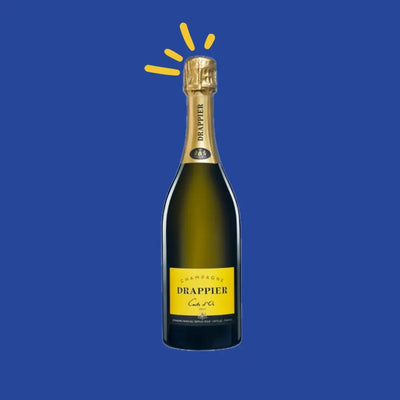
Splitting the budget intelligently
The classic mistake is buying a single cuvée for the whole wedding. The right approach is to segment:
- Reception drinks: a reliable non-vintage brut, served in volume. This is where 80 % of the bottles go.
- Toast and speeches: a cuvée one notch above, in limited quantity.
- The couple's table and close family: a prestige cuvée or a vintage, just a few bottles.
This split puts a beautiful bottle in the photographs without tripling the spend.
The cuvées that work for reception drinks
What you need: a consensual champagne, neither too dry nor too sweet, that pleases very different palates.
- Drappier Carte d'Or, pinot noir led, fruity and generous, around 38 €.
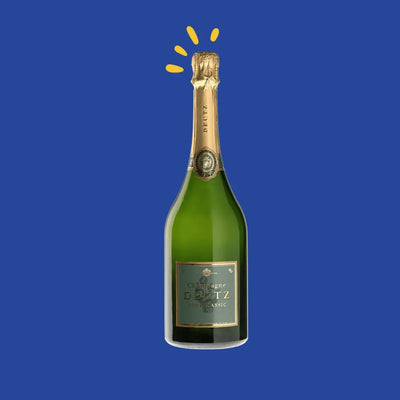
- Deutz Brut Classic, balanced and fine, around 42.50 €.
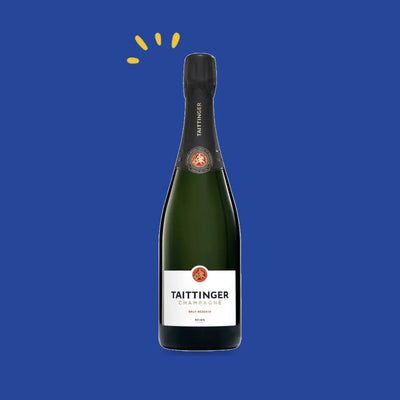
- Taittinger Brut Réserve, chardonnay led, elegant, around 46.90 €.
- Gosset Grande Réserve, more vinous, around 48.50 €.
Prices are today's and may change. The rest of the selection is on our champagnes page.
The cuvée for the toast
For the moment when everyone is watching, a blanc de blancs makes an impression without blowing the budget: 100 % chardonnay, a fine bead, a festive profile. See the blanc de blancs.
A rosé works very well too, especially for a summer wedding and for the photographs. See the rosé champagnes.
Magnum or bottle?
The magnum, 1.5 litres, has three real advantages: the wine ages better and more slowly, service is faster since there are half as many corks to pull, and the visual effect is in another league.
A magnum pours twelve glasses. For reception drinks for 85 adults at three glasses each, count around twenty magnums. See our magnums and large formats.
Service: the details that matter
- Temperature: 8 to 10 degrees. Plan for plenty of buckets and ice, not a spell in the freezer.
- Timing: take the bottles out of the cold as you go, not all at once.
- Glasses: a narrow flute traps the aromas, a tulip glass releases them. Choose the tulip.
- Delivery: have the order delivered at least a week ahead, and let the bottles stand upright for 48 hours after transport.
Frequently asked questions
How many bottles of champagne for 100 people?
For reception drinks only, count around 30 bottles for 85 adults, on the basis of 2 to 3 glasses each. If champagne is also served at dinner, plan 45 to 50 bottles. Always add a 10 % margin.
How many glasses are there in a bottle of champagne?
Six 120 ml glasses in a 75 cl bottle, twelve in a 1.5 litre magnum.
What champagne budget should you plan for a wedding?
With a non-vintage brut between 38 and 50 euros a bottle, reception drinks for 100 guests come to between 1 200 and 1 600 euros. Splitting between a volume cuvée and a few finer bottles keeps that budget under control.
Should you choose a brut or a demi-sec for a wedding?
Brut suits the whole reception and the meal. Demi-sec, with more sugar, is best kept for dessert and the cake, where a brut would taste sharp.
When should you order the champagne for a wedding?
A month ahead to be safe on cuvée availability, and at the very least two weeks ahead to absorb a delivery delay and let the bottles rest.